Built for Better Performance
Challenge
Moving in the Spirit needed to address declining page speed and accessibility performance without undertaking another full redesign or making the website harder for staff to manage.
Approach
SHERPA migrated the existing website from WordPress to Statamic, creating a faster, more streamlined CMS with structured components that preserve brand consistency across layouts, colors, typography, and buttons.
Results
A faster, lighter, and more accessible website — paired with a streamlined CMS that gives a small communications team greater autonomy while protecting brand consistency.
For nearly 20 years, Moving in the Spirit has partnered with SHERPA through multiple generations of its digital presence. As the organization and its audiences have evolved, SHERPA has helped its website evolve with them — from earlier platforms to WordPress and, most recently, Statamic.
SERVICES
Analytics Research / Content Design + Strategy / Information Architecture / Performance / Stakeholder Alignment / UI Design / UX Best Practices / Statamic CMS
OVERVIEW
Moving in the Spirit is an award-winning creative youth development organization that uses dance to help children and teens develop the social, emotional, and cognitive skills they need to thrive.

Challenge
Moving in the Spirit’s most recent website redesign was still serving the organization well visually, but the WordPress platform underneath it was beginning to create new challenges.
Page speed had declined, accessibility compliance needed improvement, and the combination of themes, plugins, and flexible page-editing tools added unnecessary complexity.
The organization also wanted staff to remain independent in managing the website without sacrificing brand consistency. Giving editors too much control over typography, colors, buttons, spacing, and layouts made it easier for individual pages to drift from the established design system over time.
Rather than redesign a website that was already working well for its audiences, Moving in the Spirit needed to modernize the technology supporting it.

Approach
SHERPA migrated Moving in the Spirit’s existing website from WordPress Elementor to Statamic, preserving the established design and content while rebuilding the underlying content-management experience.
Because Moving in the Spirit operates with a small communications team, ease of day-to-day management was a central requirement. SHERPA worked directly with the client in a staging environment to review page layouts, photography, content workflows, and editing needs. Hands-on testing helped identify additional Page Builder components and customization options, which were incorporated throughout the migration.
The resulting CMS is tailored around the content the organization actually manages. Reusable components give staff the flexibility to create engaging pages and make daily updates without touching code, while built-in controls for typography, colors, buttons, spacing, and layouts help maintain a consistent brand experience.
Migrating away from the accumulated overhead of WordPress, Elementor, themes, and plugins also created a lighter technical foundation with fewer dependencies, fewer page requests, and substantially smaller page sizes.
The result is a CMS that gives Moving in the Spirit greater autonomy while making the website faster, more consistent, easier to maintain, and better positioned for the future.
Results
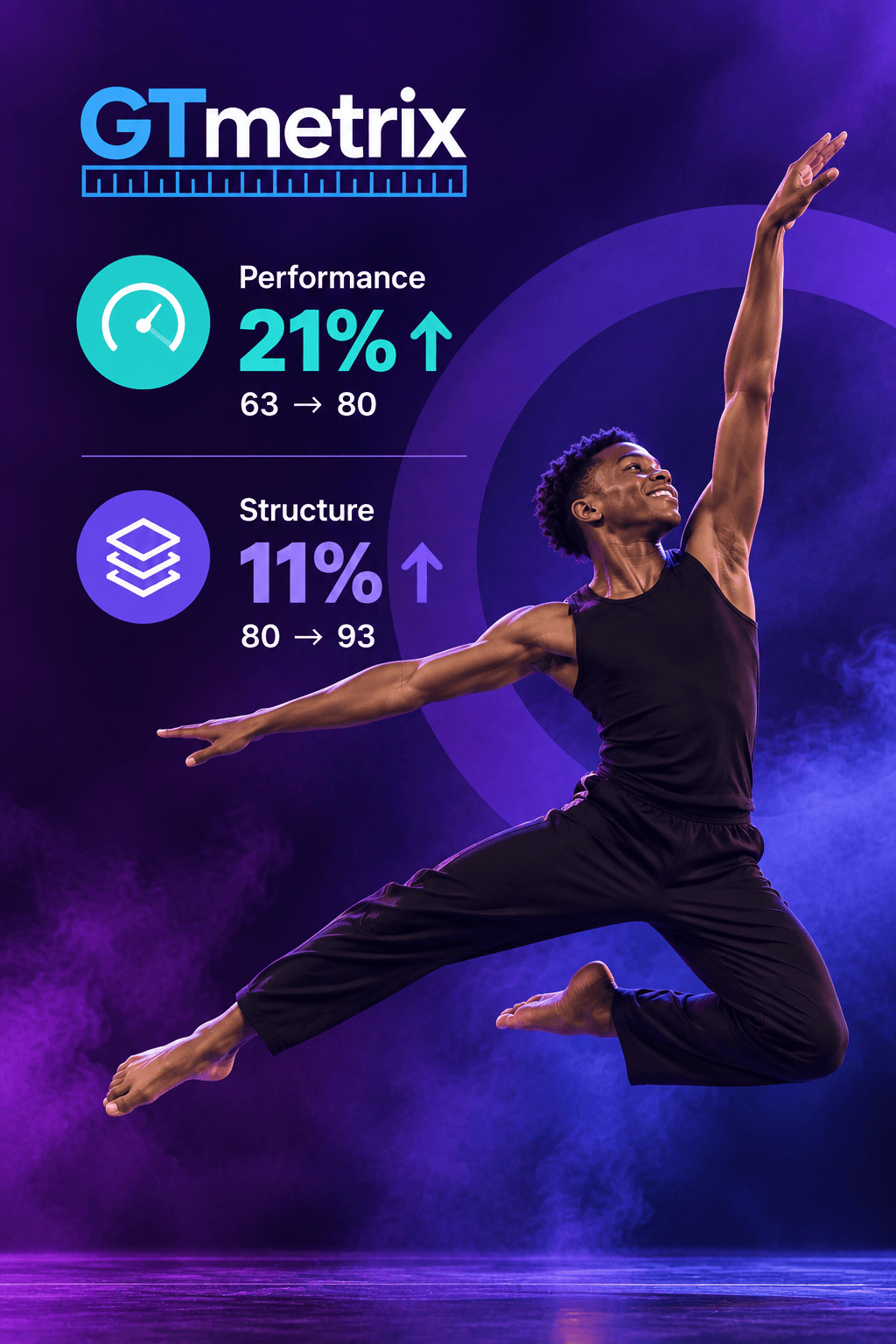
The move to Statamic delivered substantial measurable improvements in performance, accessibility, technical quality, and day-to-day content management.
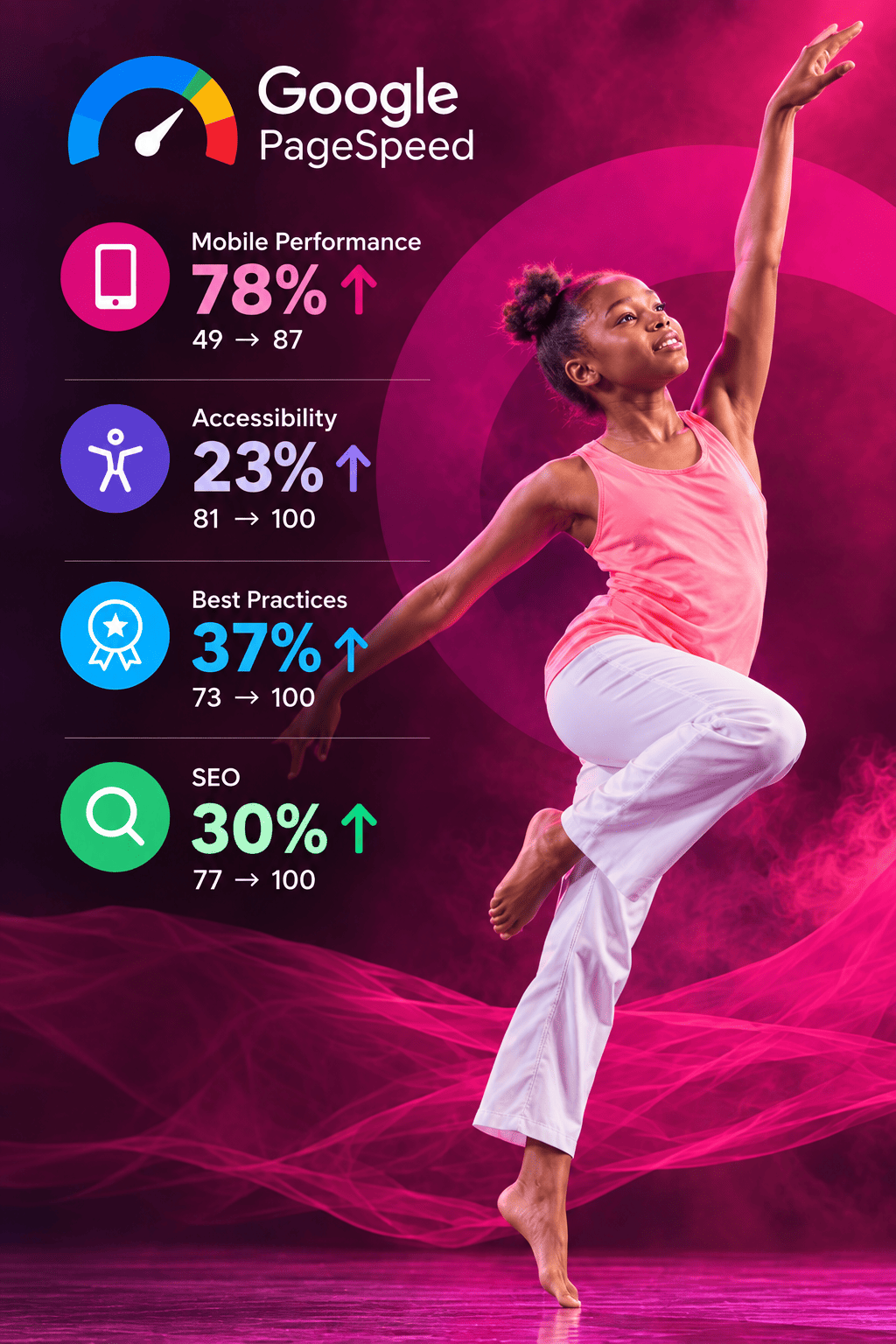
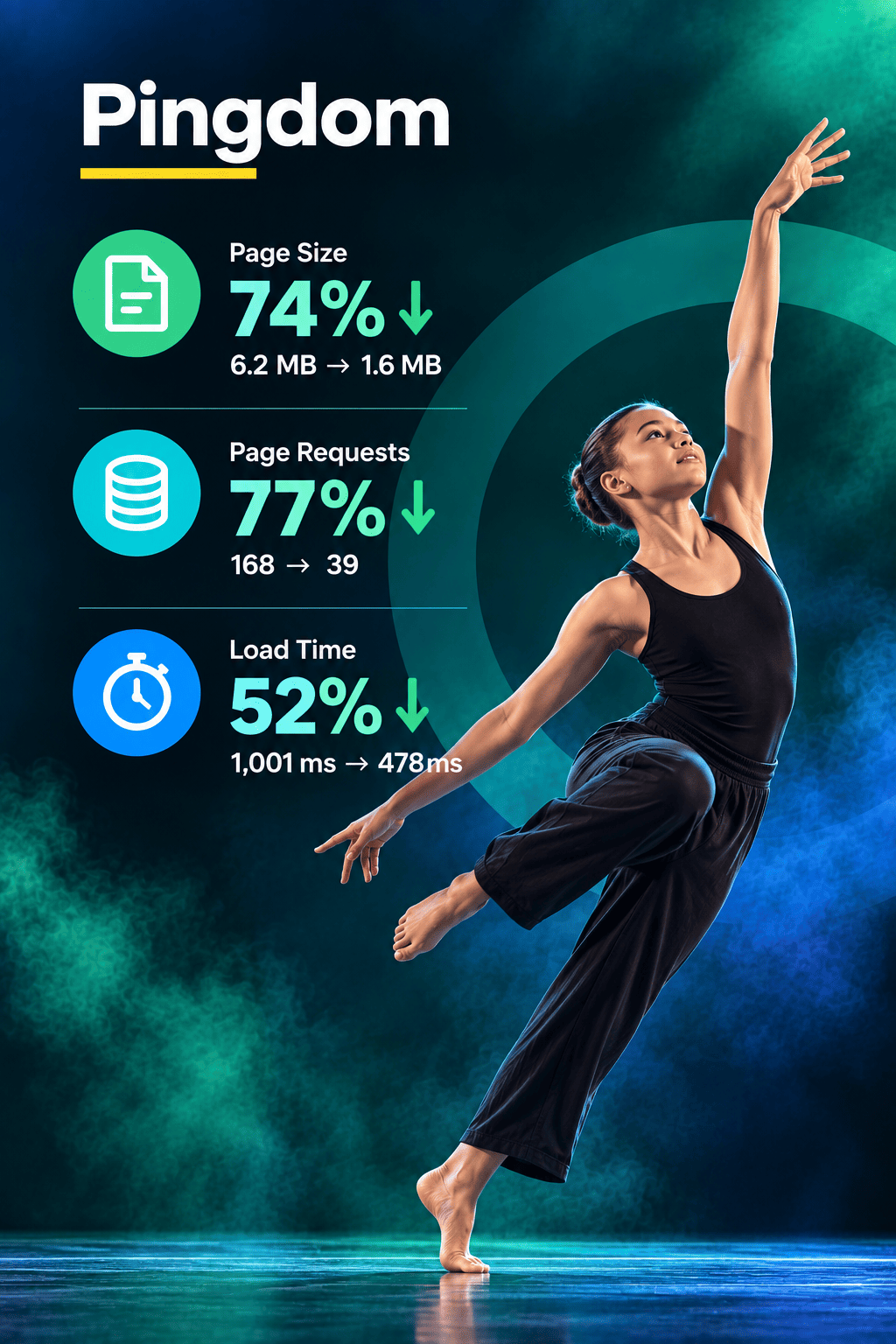
The site is now significantly faster and lighter, including a 52% faster load time, 74% smaller page size, 77% fewer page requests, and a perfect 100 accessibility score. Mobile PageSpeed performance nearly doubled.
Just as importantly, Moving in the Spirit now has a CMS designed around how its communications team actually works. Structured Page Builder components allow staff to independently create and update pages without code while maintaining consistent typography, colors, buttons, layouts, and branding.
The performance improvements have also coincided with stronger website traffic. During July and August following the migration, website sessions increased 55% year over year, from 3,244 to 5,029, despite a significant reduction in paid advertising during the same period.
The migration demonstrates that organizations do not necessarily need a full redesign to substantially improve the performance and manageability of an existing website. By modernizing the technology underneath a successful design, Moving in the Spirit gained a faster digital experience and a more sustainable platform for its small communications team.
“Since moving to Statamic, we've seen significant improvements in our website's speed and performance, including nearly doubling our mobile PageSpeed score. The new platform is easier to update and gives us a more streamlined way to manage our content and maintain consistent branding across our site.”
— Director of Marketing & Communications
OUR CLIENTS SAY THAT WE R.O.C.K
“ As a nonprofit with a small communications team, having a fast, reliable website that helps us connect with our community is incredibly valuable.
– Erin Weller Dalton, Director of Marketing/Communications

Thank you for contacting us!
We appreciate you sharing with us what you are trying to achieve. We will contact once we review your information. In the meantime, we sent you a copy of your submission to your inbox.
Ooops, captcha error!
Ooops, something went wrong!
Please try again, if you still are having trouble contact us directly at webmaster@sherpaglobal.com.
How Can We Help You?
Can't find what you need?
Call us at (404) 369-0219.
Can't find what you need?
Call us at (404) 369-0219.